Shockwave Therapy Review for Tendinopathy

A sore Achilles that flares after a walk, a stubborn heel that hurts with the first steps in the morning, or an outer elbow that makes lifting the kettle difficult can all disrupt everyday life. This shockwave therapy review for tendinopathy explains where this treatment may fit, what it feels like, and why it works best as part of a broader rehabilitation plan rather than a quick fix.
Tendinopathy is not simply a case of inflammation that needs to be settled. It is usually a persistent change in a tendon’s ability to tolerate load. The tendon may become painful when work demands, sport, exercise, or even ordinary daily activity exceed what it can currently manage. Effective care needs to address both the pain and the reason the tendon has become overloaded.
What is shockwave therapy?
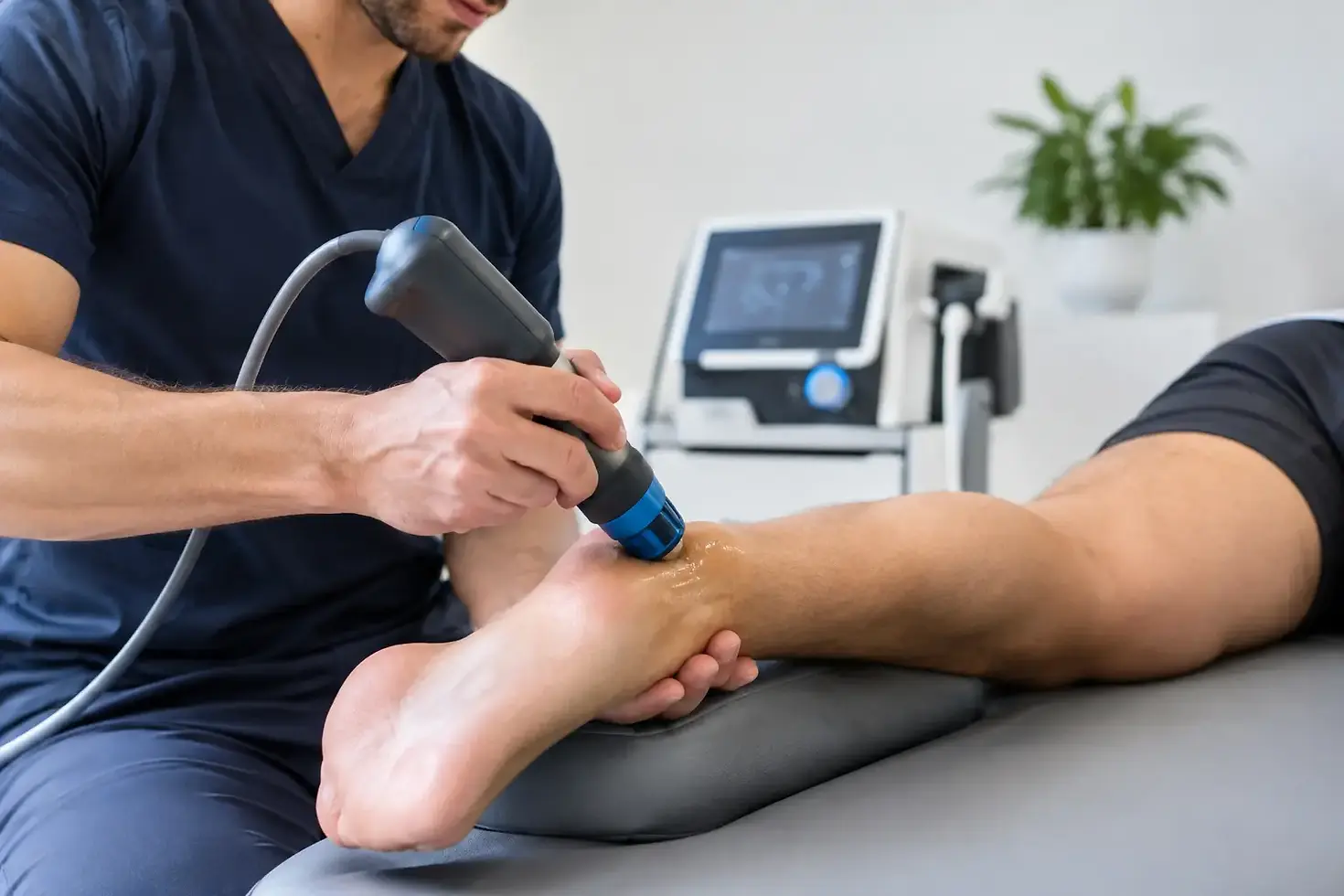
Shockwave therapy, also called extracorporeal shockwave therapy or ESWT, uses acoustic pressure waves delivered through a handheld device to the painful tendon area. A physiotherapist applies gel to the skin, positions the treatment head, and delivers a set number of pulses over several minutes.
There are different forms of shockwave treatment, including radial and focused shockwave therapy. They differ in how the energy is delivered and how deeply it is intended to reach. The most appropriate option depends on the condition, the tendon involved, your symptoms, and the equipment available. What matters most is that treatment is selected thoughtfully, not simply because a tendon is painful.
Shockwave is commonly considered for persistent tendinopathy affecting the Achilles tendon, plantar fascia at the heel, patellar tendon below the kneecap, gluteal tendons around the outside of the hip, or tendons at the elbow. It is generally more relevant for symptoms that have not settled with sensible changes to activity and an appropriate exercise programme.
Shockwave therapy review for tendinopathy: does it work?
The short answer is that shockwave therapy can help some people with persistent tendinopathy, but results vary. Research supports its use for several chronic tendon-related conditions, particularly when it is combined with progressive rehabilitation. It should not be presented as a guaranteed cure or as a replacement for strengthening and load management.
The exact benefit depends on the diagnosis. For example, heel pain associated with plantar fasciopathy and chronic Achilles pain may respond differently to treatment than gluteal or patellar tendon pain. The duration of symptoms, the severity of tendon change, general health, work demands, training habits, footwear, and previous treatment all influence recovery.
A useful way to think about shockwave is as a potential aid to rehabilitation. It may help reduce pain and improve how the area tolerates activity, allowing you to progress the exercises that build tendon capacity. The exercises, however, remain central. Tendons adapt gradually to carefully dosed loading, not complete rest indefinitely.
Some people notice an improvement after a few sessions. Others improve more gradually over several weeks or months. A short-term increase in soreness can also occur after treatment. Your physiotherapist should set realistic expectations from the first appointment and review whether the plan is producing meaningful changes in pain, function, work tolerance, or return to sport.
What does treatment feel like?
During shockwave therapy, most people feel a tapping, pulsing, or firm pressure over the affected area. It can be uncomfortable, especially over a sensitive tendon, but the intensity can usually be adjusted. Your physiotherapist will aim for a level that is tolerable while still appropriate for treatment.
A session itself is relatively brief. The wider appointment is more important: assessing the tendon, checking movement and strength, discussing aggravating activities, and progressing your home programme. Depending on the presentation, treatment is often delivered over a series of appointments rather than as a one-off session.
Afterwards, the area may feel tender for a day or two. This does not automatically mean harm has been done, but it is worth monitoring. You may be advised to modify high-impact exercise or heavy tendon loading briefly after treatment, then return to a planned strengthening programme. Specific advice will depend on the tendon and your usual activities.
Who may benefit most?
Shockwave therapy is usually considered when tendon symptoms have become persistent and are limiting meaningful activities despite an initial period of well-managed care. This may include a recreational runner unable to increase distance because of Achilles pain, a worker struggling with repeated gripping due to tennis elbow, or someone with heel pain that makes standing and walking difficult.
It may be especially useful when pain has created a barrier to progressing exercise. For example, a person with long-standing plantar heel pain may find that reduced symptoms make it easier to strengthen the calf and foot muscles, improve walking tolerance, and return to preferred activities.
It is not always the right first step. Early tendon pain often responds well to education, temporary adjustment of aggravating activity, targeted exercise, and attention to factors such as training load, recovery, footwear, technique, or workplace demands. Starting with a careful assessment can prevent unnecessary treatment and give you a clearer path forward.
Why rehabilitation still matters
If pain settles but the tendon has not regained capacity, symptoms can return as soon as life gets busy again. That is why a good tendinopathy plan looks beyond the treatment room.
Your rehabilitation may include strengthening exercises for the tendon and surrounding muscles, gradually increasing walking, lifting, running, jumping, or work tasks, and practical changes to reduce repeated aggravation. A gluteal tendon programme, for instance, may address hip strength and positions that compress the outside of the hip. An Achilles programme may focus on calf strength and a sensible return to hills, running, or court sport.
Load management does not mean stopping everything you enjoy. It means finding an amount of activity the tendon can handle, then building from there. Pain is one useful guide, but it is not the only one. How you feel later that day and the following morning, your function, and your trend over several weeks all help shape the plan.
For people recovering from a workplace injury, surgery, or a long period of reduced mobility, rehabilitation may also include functional goals such as climbing stairs, managing a shift on your feet, getting in and out of a car, or returning to safe manual tasks. The programme should match your real life.
Risks, side effects and when shockwave is not suitable
Shockwave therapy is generally well tolerated when provided after an appropriate assessment. Temporary discomfort during treatment and local soreness afterwards are the most common effects. Occasional bruising, redness, or numbness can occur.
It is not suitable for every person or every painful area. Your physiotherapist will ask about factors that may affect safety, including pregnancy, bleeding disorders or anticoagulant medication, active infection, reduced sensation, cancer in the treatment area, and recent steroid injection near the tendon. Care is also needed around growth plates in children and adolescents.
Not every tendon pain is tendinopathy. Sudden severe pain, a popping sensation, marked weakness, inability to bear weight, a hot swollen joint, fever, or unexplained night pain should be assessed promptly. These symptoms may indicate a different problem that needs medical review rather than shockwave treatment.
Choosing a treatment plan that suits you
The best plan starts with a diagnosis and a conversation about what you need to get back to. A parent may want to walk comfortably on the school run. A tradie may need to grip tools without elbow pain. A runner may be working towards a local event. Those goals guide the treatment choices and the pace of rehabilitation.
At Daw Park Physiotherapy, shockwave therapy can be considered alongside expert physiotherapy services, hands-on treatment where appropriate, and a tailored exercise programme. In a warm family environment in the local community, the focus is on helping you understand your condition and build practical, lasting progress.
If a tendon has been painful for weeks or months, it is reasonable to ask whether shockwave may help. The most useful answer will be individual: a clear assessment, an honest discussion of likely benefits and limits, and a rehabilitation plan you can realistically follow. Small, consistent improvements in what your body can do are often the strongest sign that recovery is moving in the right direction.



Comments