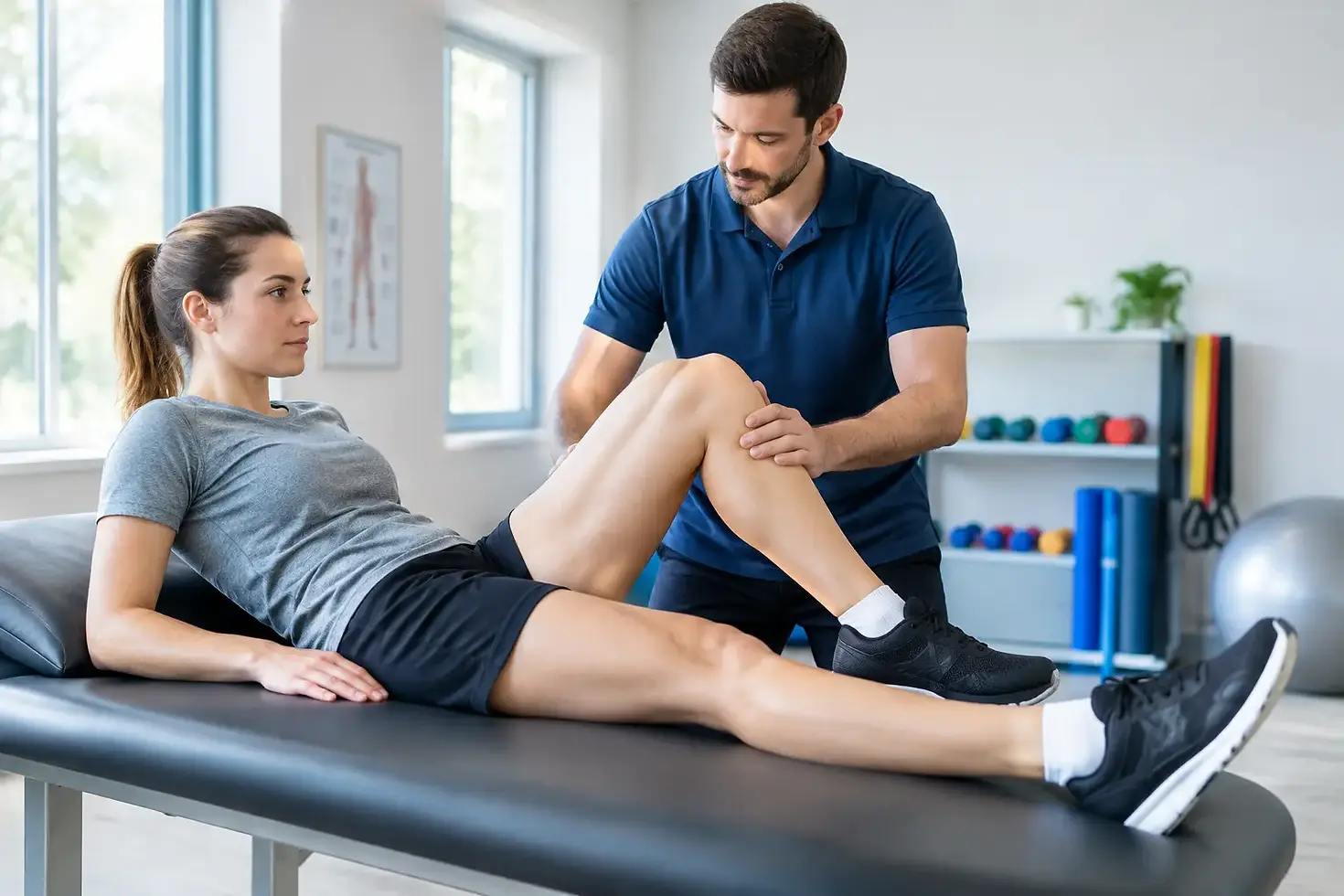
ACL Surgery Rehabilitation Steps and Timelines

The first few weeks after an ACL reconstruction can feel slower than expected. Your knee may be swollen, stiff and unreliable, while everyday tasks such as getting in and out of the car or walking around the shops suddenly require planning. Clear ACL surgery rehabilitation steps help turn that uncertain period into a structured recovery, with each stage preparing your knee for the next.
An anterior cruciate ligament, or ACL, reconstruction is a significant operation. The graft needs time to heal and adapt, while the muscles around your hip, thigh and calf must regain their strength and control. Good rehabilitation is not about pushing through pain or rushing towards sport. It is about restoring movement, building capacity and helping you return to the activities that matter to you with confidence.
ACL surgery rehabilitation steps: the overall pathway
Your surgeon’s protocol always comes first, particularly if your ACL operation included a meniscus repair, cartilage procedure or other work inside the knee. These additions can change how much weight you can place through the leg and how far you can bend the knee early on.
For many people, rehabilitation progresses through several overlapping phases: settling pain and swelling, regaining range of motion, rebuilding strength, developing balance and movement control, then preparing for work, recreation or sport-specific demands. A calendar is useful, but your symptoms and functional progress matter more than a single date.
Phase one: protect the knee and settle swelling
This begins immediately after surgery and usually covers the first one to two weeks. The priorities are protecting the surgical site, managing swelling and pain, and starting safe movement as advised by your surgeon and physiotherapist.
You may use crutches, a brace or both. This is not a sign that you are behind. Crutches help you walk without a pronounced limp while your quadriceps muscle is inhibited by pain and swelling. Your physiotherapist can check that the crutches are set to the right height and teach you how to use stairs safely.
Early exercises are often simple but valuable. They may include ankle pumps to support circulation, gentle knee bends, knee straightening exercises and quadriceps contractions. Getting the knee fully straight is particularly important. A knee that remains even slightly bent can affect walking, delay muscle recovery and create ongoing discomfort.
Ice, elevation and regular movement can assist with swelling. However, increasing swelling, redness, calf pain, shortness of breath, fever or wound leakage should be discussed promptly with your surgical team or GP. These symptoms need medical assessment rather than an attempt to exercise through them.
Phase two: restore movement and a normal walking pattern
Over the next several weeks, the focus shifts towards bending and straightening the knee comfortably, reducing reliance on crutches and walking with an even stride. The aim is not merely to get around without crutches. It is to avoid developing a limp that places extra stress on the knee, hip or lower back.
Your physiotherapy program may include gentle manual therapy, patella mobilisation where appropriate, cycling movements and carefully progressed strengthening. Exercises such as supported squats, sit-to-stands, bridges and step-ups can help restore everyday function. The right exercise selection depends on your graft type, surgical findings, swelling and current control.
A common mistake is doing too much on a good day. If your knee becomes significantly more swollen, painful or stiff later that day or the next morning, the workload may need adjusting. Rehabilitation should provide a manageable challenge, not leave the joint persistently irritated.
Rebuilding strength after ACL reconstruction
Once you can move well and walk without a limp, progressive strength work becomes central to ACL rehabilitation. The quadriceps often lose strength quickly after surgery, but the hamstrings, gluteals, calves and trunk also contribute to safe knee control.
Strengthening usually begins with controlled double-leg movements before progressing to more demanding single-leg work. This may include leg press, squats, lunges, step-downs, hamstring exercises and calf raises. Your physiotherapist will consider technique as well as load. For example, a knee that collapses inwards during a step-down can indicate that more hip strength, balance training or movement coaching is needed before increasing weight.
This stage is often where people feel motivated because daily pain has settled. It is also where consistency matters most. Completing a tailored home program between appointments helps build the strength needed for work, family life and sport. A person returning to a physically demanding job may need to practise lifting, carrying, kneeling or climbing tasks. Someone aiming to return to netball, football or skiing will need a different progression.
Balance, control and confidence
ACL injuries can affect the body’s sense of joint position and movement. This is why rehabilitation includes more than gym-based strength exercises. Balance tasks, single-leg control, changes of direction and landing practice help retrain how the leg responds during real-life movement.
Early balance work might be as straightforward as standing steadily on one leg near a bench for support. Later, exercises can progress to reaching tasks, uneven surfaces, hopping and controlled landings. The progression should be earned. Landing drills before sufficient strength and control can reinforce poor technique rather than improve it.
Confidence deserves attention too. It is normal to feel cautious about twisting, hopping or returning to a field or court after an ACL injury. Avoidance can be useful in the early stages, but long-term fear may prevent a full return to valued activities. Repeated exposure to well-chosen movements, with clear feedback from your physiotherapist, can help confidence catch up with physical recovery.
Running, jumping and return to sport
Running is usually introduced only when the knee has settled, movement is near normal and you have sufficient strength and control. For some people this occurs after several months; for others, particularly after additional procedures or with ongoing swelling, it may take longer.
A return-to-running program normally starts with brief, controlled intervals on a predictable surface. The knee response over the next 24 hours guides progression. If there is no meaningful increase in pain, swelling or stiffness, running volume can gradually build.
Jumping, hopping, cutting and pivoting come later. These activities place greater demand on the ACL graft and surrounding muscles, especially when the body is tired or reacting to an unpredictable situation. Sport-specific rehabilitation should reflect your actual goals. A recreational cyclist does not need the same testing as a basketball player, while a tradie may need more preparation for uneven ground, ladders and carrying loads.
Return to pivoting sport is commonly a longer process, often taking nine months or more. Time alone is not clearance. Your treating team may use strength measures, hop tests, movement assessment and discussions about confidence before supporting a return. This thorough approach is designed to reduce the chance of another knee injury.
What can slow rehabilitation down?
Recovery is rarely perfectly linear. Swelling flare-ups, disrupted sleep, work pressures, illness and reduced time for exercise can all affect progress. A previous knee injury, lower fitness before surgery or an additional meniscus repair may also mean that your pathway needs more patience.
The goal is not to compare your knee with someone else’s recovery on social media or at the club. It is to respond to your own knee, meet meaningful milestones and keep moving forward. Regular assessment allows your program to change as your strength, movement and goals change.
At Daw Park Physiotherapy, our expert physiotherapy services combine hands-on care, tailored exercise and practical guidance in a warm family environment in the local community. We can work alongside your surgeon and other health professionals to support a safe, individualised return to the activities that make up your everyday life.
A successful ACL recovery is built one capable movement at a time. Give the graft the time it needs, keep your rehabilitation consistent and let clear functional progress, rather than impatience, guide the next step.


Comments